Blog - Flexible Staffing Strategies for 2026: Staying Agile in the New Year

In 2026, rigid workforce models are being replaced with more dynamic, adaptive approaches. From gig workers and contractors to hybrid schedules and project-based teams, companies are rethinking how talent fits into business success. In 2026, the winners won’t just have talent; they’ll have workforce agility.
At PeopleSolutions, we’re on the front lines of this shift. In this post, you’ll learn top flexible staffing strategies that smart companies are using to stay competitive and how to apply them in your organization.
Why Flexible Staffing Strategies Are the Future
Before we talk tactics, let’s answer the big question:
Why are flexible staffing strategies critical for 2026?
The answer is simple: workforce expectations and business realities have changed.
According to the Upwork Future Workforce Index, more than 28% of skilled knowledge workers in the U.S. are already working in freelance or non-traditional roles, earning a collective $1.5 trillion in 2024, with many full-time freelancers out-earning traditional employees.
That’s huge.
Add to that:
- The gig economy is valued at ~$646.77 billion in 2025, and is projected to grow rapidly.
- Staffing industry stats show temporary workers represent about 2% of the U.S. workforce, yet they play a critical role in filling gaps.
- And 71% of employers expect to use more temporary or flexible workers in 2025.
Together, these trends paint a clear picture: the future of work is hybrid, project-based, and flexible by design.
Build a Hybrid Workforce Model That Works
While full-time in-office work is making slow comebacks in some sectors, remote and hybrid arrangements dominate staffing strategies, with 71% of U.S. companies adopting permanently flexible work models.
Why does this matter?
- Access broader talent pools. You’re no longer limited to local hires.
- Boost retention. Many workers choose employers that offer flexibility first.
- Cut overhead. Remote teams reduce office and operations costs.
Pro Tip: Design job descriptions with remote flexibility in mind from the start. Consider “location-agnostic” roles to attract talent outside your geographic hub.
Leverage Data & Workforce Planning Tools
Agile staffing depends on real-time visibility.
Invest in cloud-based HR and scheduling tools so you can:
- Forecast peak demand
- Spot skills gaps
- Track utilization across full-time, contract, and contingent staff
Modern workforce platforms help companies scale up or down without guesswork. Decision making becomes data-driven and there’s no more hiring based on “gut feeling.”
This ties directly into contract staffing strategies that let organizations respond quickly to short-term needs without long-term risk.
Make Contract Staffing Strategies Part of Your Growth Plan
Contract staffing strategies shouldn’t be an afterthought; they should be a pillar of workforce planning.
Here’s why:
- 49% of staffing workers prefer contract roles for scheduling flexibility
- Contract roles help plug immediate talent gaps during demand spikes
- Many contract workers are willing to transition to permanent roles, making temp-to-hire a viable pipeline
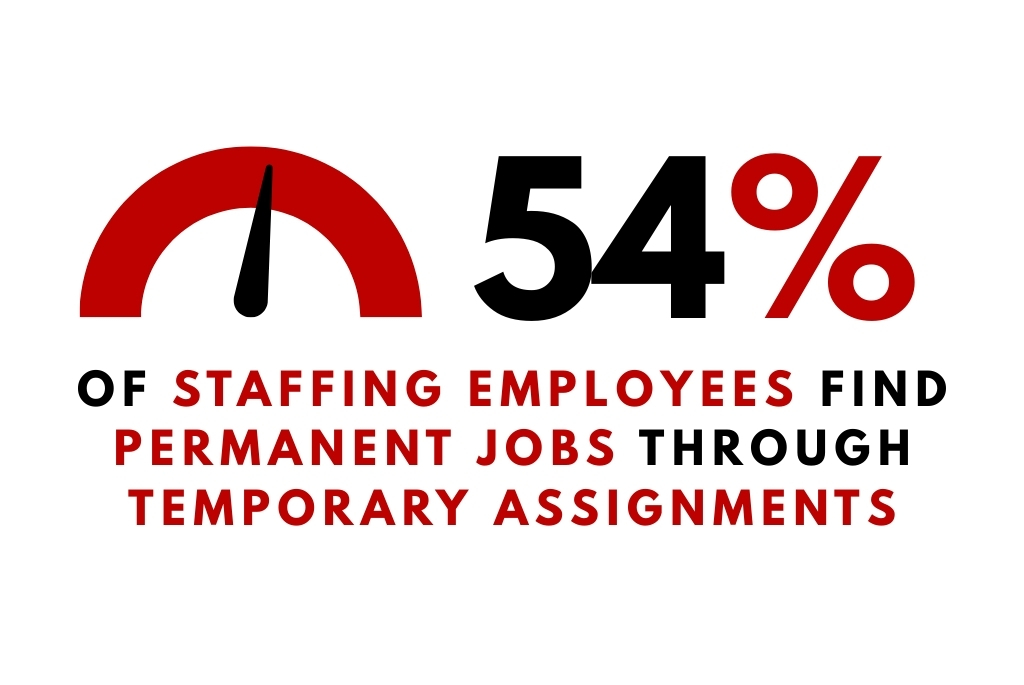
In fact, 54% of staffing employees find permanent jobs through temporary assignments.
This means your contract staffing strategies are more than stopgaps; they’re strategic talent funnels.
Prioritize Scheduling Flexibility
Workers care about more than pay.
According to a 2025 workforce report, a whopping 77% of workers rank flexible schedules above other job benefits, and flexible pay (like fast-pay options) boosts loyalty.
That’s a clear signal that:
- Workers want control over when they work
- Scheduling flexibility earns loyalty and reduces churn
- Flex options, like compressed workweeks or flexible shift blocks, make you more competitive
Tap Into the Gig Economy Purposefully
The gig economy isn’t a niche; it’s now mainstream.
Upwork’s data shows the number of freelancers and contingent workers continues to grow. Combined with the broader market valuation of the gig sector being in the hundreds of billions, it’s clear the shift isn’t slowing.
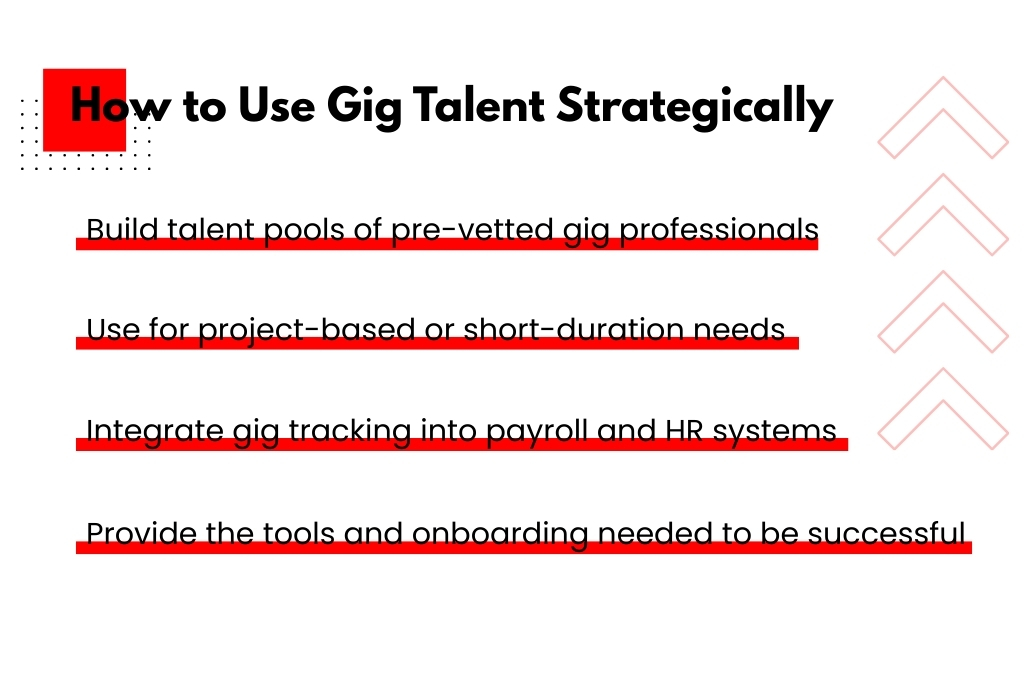
So how do you use gig talent strategically?
- Build talent pools of pre-vetted gig professionals
- Use gig workers for project-based or short-duration needs
- Integrate gig tracking into payroll and HR systems
- Provide the tools and onboarding gig workers need to be successful
A thoughtful gig strategy keeps projects moving without the penalties of slow hiring cycles.
Focus on Skills, Not Titles
If 2026 has taught us anything, it’s this:
Skills matter more than job titles.
The rise of AI, automation, and role fluidity has made skill-based hiring essential. Companies that evaluate candidates on ability are the winners.
Practical ways to do this:
- Incorporate skill assessments into interviews
- Match internal talent to projects based on capability
This also feeds back into flexible staffing strategies because it allows workers to transition among roles fluidly, eliminating bottlenecks and boosting utilization.
Put Worker Experience Front and Center
When we talk about flexible staffing, we often mean operational flexibility. But let’s not forget human flexibility; the worker experience.
Employees today expect:
- Clarity on schedules
- Fair compensation models
- Options to choose shifts or contract terms
- Technology that supports their workflow
PeopleSolutions advises companies to treat contract and flexible workers with the same engagement philosophy as full-time staff. That includes clear communication, transparent feedback loops, and inclusion in workforce planning.
Happy workers = productive workers.
Embrace Agile Workforce Budgeting
Traditional headcount budgeting is outdated.
Modern workforce planning should be flexible, too. That means:
- Allocating budgets for contingent and contract staffing
- Forecasting seasonal and project-based labor needs
- Leaving room for hiring flexibility when markets shift
Financial agility gives organizations the confidence to respond to opportunities and setbacks without sacrificing operational continuity.
Conclusion: Your Roadmap to Workforce Success in 2026
The demand for agility isn’t going away. If anything, it’s accelerating.
Companies that adopt flexible staffing strategies and embed contract staffing strategies into their planning build resilient, future-proof teams that attract talent and adapt to change.
At PeopleSolutions, we help organizations design staffing models that reflect this adaptive approach. Whether you’re scaling for growth, navigating uncertainty, or building a talent pipeline, we tailor contract staffing strategies that work and set you up for success in 2026 and beyond.
Take Action Today
If you’re ready to rethink your staffing approach, start with a conversation:
Connect with PeopleSolutions.
Let us help you build flexible workforce solutions that power performance and growth.
