Blog - How to Build a Workplace Culture Made for Contract Roles

How do you build a workplace culture where people in contract roles feel just as valued, engaged, and motivated as your full-time team?
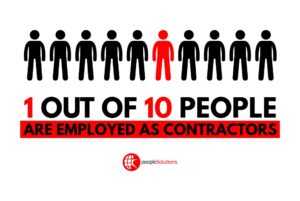
That question matters now more than ever. New research from MIT Sloan estimates that more than one in ten U.S. workers are employed as contract employees, showing how central non-traditional work has become to the modern labor market. According to the U.S. Bureau of Labor Statistics, 4.3% of workers (about 6.9 million people) held contingent jobs in July 2023, meaning roles that are temporary or not expected to last.
In other words, contract talent is not a side story. It’s already core to how work gets done. The question is whether your culture has caught up.
At PeopleSolutions, we’ve observed that when organizations intentionally design culture around contract roles, they unlock better performance, smoother collaboration, and a stronger employer brand.
Why Workplace Culture for Contract Roles Can’t Be an Afterthought
Let’s start with the stakes. Contingent workers often sit at the edges of culture; brought in quickly, onboarded lightly, and left out of the conversations that shape how work really gets done.
These decisions have consequences. BLS data shows that workers in contingent jobs are far less likely to have employer-provided health insurance than non-contingent workers (19.9% compared with 51.2%), highlighting a broader pattern of weaker integration and support.
At the same time, the world of work is transforming around them. The World Economic Forum’s Future of Jobs Report 2025 estimates that 39% of current skill sets will transform or become outdated by 2030, and that around 50% of workers have already engaged in training, reskilling, or upskilling to keep up. A growing share of that reskilling and project work is happening through flexible, contract-based arrangements.
If your workplace culture doesn’t actively include contract roles, you risk poor engagement, knowledge loss, and inconsistent quality right where you need agility most.
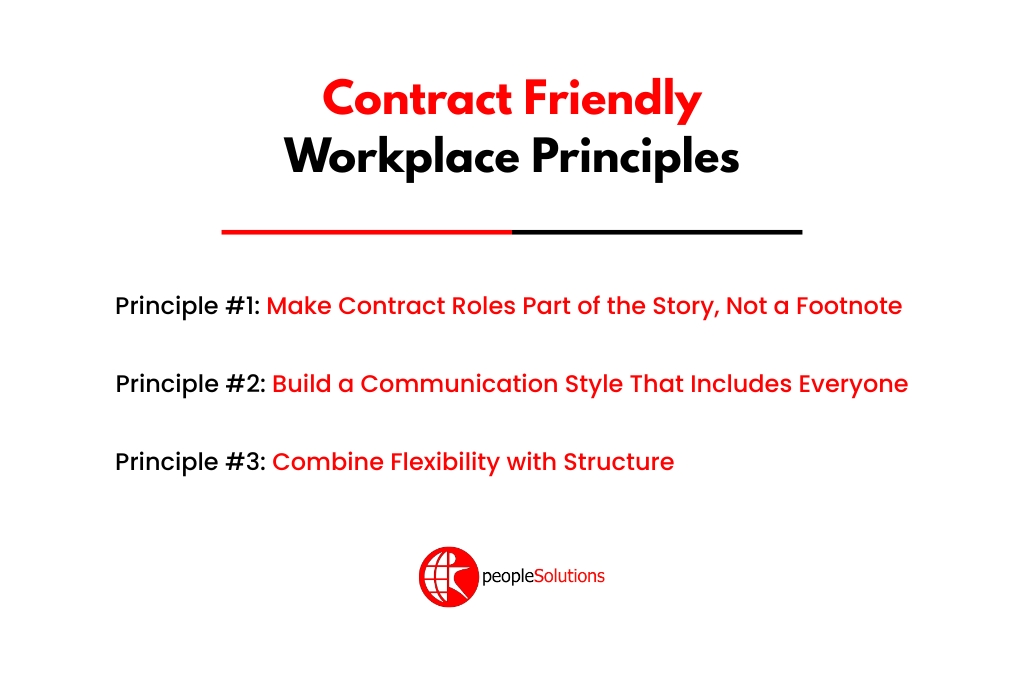
 Principle 1: Make Contract Roles Part of the Story, Not a Footnote

Culture is shaped by what people experience day to day: how they’re greeted, how decisions are explained, and how success is shared.
From PeopleSolutions’ perspective, organizations that thrive with contract talent do three simple but powerful things from day one:
- Onboard contract professionals with intention. Even if their time with you is shorter, they still need context on your mission, values, team norms, and decision-making.
- Connect them to people, not just tasks. Assign a go-to contact or “buddy” so they’re not left guessing who to ask for what.
- Explain the “why” behind the work. When contractors see how their project fits into your bigger goals, ownership and quality both go up.
This doesn’t require a huge program. It requires a mindset shift: treating your contract workforce as partners in your story, not just additional capacity.
Principle 2: Build a Communication Style That Includes Everyone
A strong workplace culture is really a strong communication culture. For people in contract roles, that’s even more important because they often join in the middle of projects, with tight timelines and lots of moving parts.
Helpful questions to ask yourself:
- Do contract professionals get access to the same project tools, calendars, and documentation as full-time employees?
- Are expectations, deliverables, and decision-makers clearly laid out at the start of the engagement?
- Do your leaders invite input from contractors on what’s working (or not) in your processes?
This last point matters more than many teams realize. Contract specialists often work across multiple organizations and bring insight into different ways of working. Ignoring their perspective means missing free, high-quality process consulting.
Globally, policy groups like the OECD (Organization for Economic Co-operation and Development) have emphasized how engagement and well-being are tied to leadership quality, learning opportunities, and dialogue at work. Extending that dialogue to contract talent is a low-cost way to boost both performance and morale.
Principle 3: Combine Flexibility with Structure
Contract roles are attractive because they offer flexibility for organizations and professionals. But if everything around the role is ad hoc, that flexibility turns into friction.
The organizations PeopleSolutions supports most successfully tend to:
- Standardize “how we work together” (simple playbooks, consistent use of tools, expectations for response times and updates).
- Leave room for “how we deliver” (location, schedule, or specific methods, when the work allows it).
This balance becomes even more important as skills need to change. The World Economic Forum’s Reskilling Revolution initiative reports that more than 716 million people worldwide are on track to be reached with skills development programs focused on future-proofing careers amid technological and green transitions. Many of those new skills (data, digital tools, AI, sustainability) are plugged into organizations through contract roles first.
When your processes are clear and your culture is welcoming, contract professionals can apply those new skills quickly, rather than spending their first weeks just figuring out “how things work here.”
Turning Contract Talent into a Long-Term Advantage
One common misconception is that culture is for the “core team” and contracts are temporary, so investing in them doesn’t pay off. In reality, the opposite is often true.
Because contract roles are so prevalent (contract employees represent more than 10% of the U.S. workforce in some estimates), they become a major channel through which clients, partners, and candidates experience your brand. A contractor who feels ignored or excluded won’t just deliver less; they’re also unlikely to work with you again or recommend you to others.
On the other hand, when your workplace culture:
- Welcomes contract professionals quickly
- Communicates clearly
- Respects their expertise and time
You build a ready-to-go network of people who know your systems, understand your standards, and are happy to return for future projects.
How PeopleSolutions Helps You Build A Contractor Friendly Workplace
At PeopleSolutions, we focus on connecting organizations with the contract talent they need. We help them set up those roles for success from a culture perspective.
That can look like:
- Advising on simple, scalable onboarding playbooks tailored to contract roles
- Helping leaders define the “contractor experience” they want to create, from first contact to final handoff
- Sharing best practices for communication, recognition, and knowledge transfer so that every engagement leaves your organization stronger
In a labor market where skills evolve quickly and flexibility is essential, the companies that win won’t just be the ones who find great people for contract roles. They’ll be the ones who build a workplace culture where those people can do their best work confidently, consistently, and proudly.
If you’re ready to turn contract roles into a true competitive advantage, PeopleSolutions is here to help you design a culture that works for everyone who walks through your doors.
